

Article 1: Intro to Character Design Sheets. Keeping Characters Consistent Across Every Scene
Creating a great character is one thing. Keeping them consistent is another. With Character Sheets, you streamline your process, avoid common mistakes, and bring characters to life in every panel.

A character design sheet is more than just a reference—it's a tool that keeps your characters consistent and your storytelling clear. For any comic creator, having well-constructed Character 3-Views, Expression Charts, and Character Comparison Sheets for multiple characters is essential to maintaining continuity and avoiding the frustrations of off-model designs. (This is industry jargon for “Is this the same character? Because it doesn’t look like it.”) Here's a quick guide on why these sheets are necessary, what they should include, and how to use them effectively.
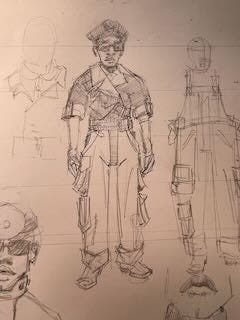
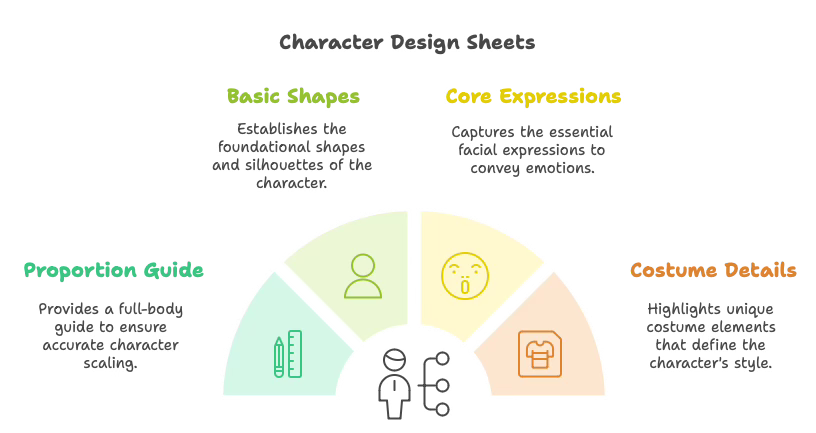
A "bare minimum" set of character sheets should include a full-body proportion guide, basic shape/silhouette, core expressions, and possibly some simple costume details. These elements are enough to capture a character's essential visual identity, saving you time while still ensuring consistency for your readers.
WARNING:
Character sheets are essential process tools for a smooth and efficient creative workflow. They're not polished pieces for public consumption. At best, they'll end up being bonus material at the back of your comic. They're working documents for your eyes only. Don't overcommit here. Keep it practical. Their purpose is simple: to reduce the time spent on details, eliminate inconsistencies, and give you a clear view of each character. Character sheets aren't something to stress over or devote weeks to—they're there to help you capture the essentials quickly so you can spend more time focusing on storytelling and art. Nothing says you can't evolve character sheets as you go. Draws of your actual story must be your focus. I want your story out in the world.
Why Character Design Sheets are Essential Tools
Character design sheets anchor your characters in a consistent, repeatable form. Without a design sheet, minor inconsistencies quickly add up: proportions shift, costume elements vary, and expressions lose their specificity. This makes it harder for readers to follow your story and can break immersion. A character sheet solves these issues by providing a fixed reference to return to, keeping characters true to their intended design and personality from start to finish.
What Can Go Wrong Without a Character Design Sheet?
Without a reference, characters often appear inconsistent in size, shape, or costume. Key details, like scars or unique clothing features, may be forgotten or altered in different scenes, causing visual dissonance. Expressions can also vary, making it hard to capture consistent emotional tones. When readers pick up on these inconsistencies, it can pull them out of the story, weakening the impact of your work.
What is a Character Design Sheet?
A character design sheet is a dedicated page (or set of pages) with detailed visuals and notes about your character's appearance, proportions, expressions, and personality. It allows you to quickly reference everything about your character in one place. Whether you're creating an everyday protagonist or a complex fantasy figure, this sheet is a crucial resource that keeps every panel in sync with the character's original design.
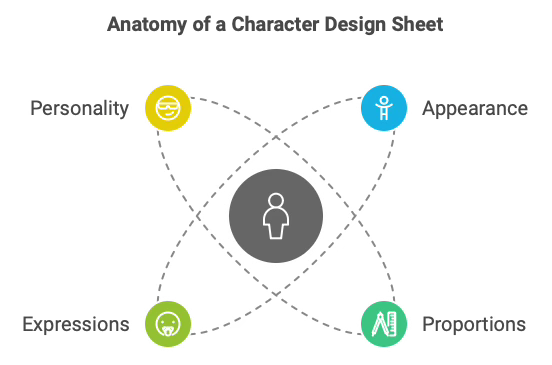
Character Design Sheets: It’s not just one thing, it’s several.
Silhouette and Basic Shape Language
This outlines the character's unique shape and posture. Silhouettes make characters recognizable even without internal details, reinforcing their visual identity in a simple, powerful way.
Full-Body Proportion Guide
This is the foundational full-body sketch showing the character's height and proportions (typically based on an 8-head system or similar). This section ensures that the character maintains consistent body size and proportions.
Expressions
A set of five to seven expressions capturing a range of emotions. This ensures the character's face stays consistent while allowing for emotional depth, even in extreme poses or reactions.
Costume and Accessories
Front and back views of the character's primary outfit, with close-ups of any significant details or accessories (like jewelry or a signature weapon). This prevents costume drift and keeps your character visually consistent.
Color Palette
Color swatches for critical elements, including skin tone, hair, and clothing, to maintain consistent coloring across scenes.
Poses and Gestures
A few poses or gestures that capture the character's personality (like a confident stance or nervous habit). These serve as a reminder of how the character naturally moves and holds themselves.
Quick Personality Notes
A few keywords or short phrases that sum up the character's personality or motivations. These keep their core traits in mind and help ensure the character remains visually true to their essence.
Character Comparison Sheets (getting the cast together)
In addition to individual design sheets, a character comparison sheet can be a formative document for comics with multiple characters. This sheet helps establish each character's unique visual identity relative to other characters. Size, silhouette, and proportions are defining characteristics.
Core Components of a Character Comparison Sheet
Silhouette Comparison
Shows simplified silhouettes of each significant character side by side, allowing you to easily distinguish between characters based on their unique shapes and postures.
Label each silhouette with the character's name to track who's who. This silhouette view is a shorthand for each character's unique build, making them quickly recognizable.
Full-Body Proportion Comparison
Draw each character from head to toe in a relaxed stance, side by side. Use your standard proportion system (e.g., 8-heads) to ensure the heights, body shapes, and general structure are consistent and accurate.
This comparison should show these differences if certain characters are shorter, taller, or have unique proportions.
Key Measurements and Labels
Mark each character's height, shoulder width, or distinctive features (like broad shoulders or a shorter torso). This allows you to easily recreate these differences in multi-character scenes without re-measuring every time.
When it comes time to put multiple characters into the same space together, it's helpful to know exactly how short or tall they are relative to the other characters.
How to Use Character Design Sheets, Character Comparison Sheets, and Expressions Guides
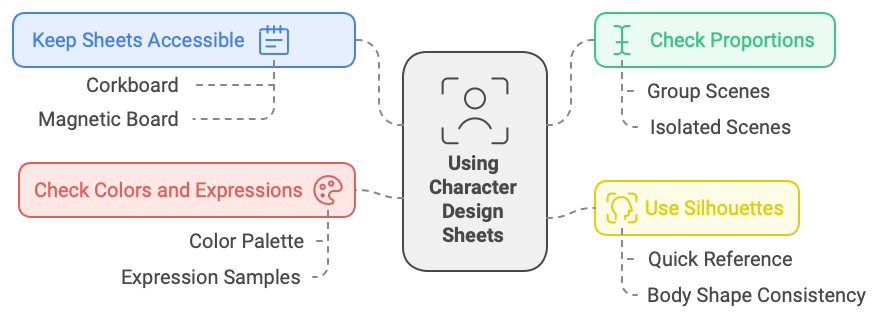
Keep Your Sheets Accessible: The design and comparison sheets should be visible or easily accessible as you draw. A corkboard or magnetically attached sheet is just the ticket. These sheets aren't just for reference; they're your anchor for drawing your character consistently.
Check Proportions in Group Scenes: Whenever characters appear together, consult the comparison sheet to ensure sizes and shapes stay consistent. Even in isolated scenes, the comparison sheet can help you remember how characters visually relate to each other. If "Lil' Jim" is 3 feet tall, then knowing that "Big Bob" is literally twice his height will eliminate all your recurring mental calculus.
Use Silhouettes as a Quick Guide: Silhouettes help maintain character identity without relying on internal details. They're a fast, practical reference for rough sketches or spotting general body shape inconsistencies. Mickey Mouse's ears are ALWAYS circles facing the camera, and silhouette guides ensure it stays that way.
Check Colors and Expressions, especially at key emotional moments: Use the color palette and expression samples on the design sheet to maintain consistency across different scenes and emotional contexts. If you're not doing color yet, this can wait.
Shape Language
In character design, the term "Shape language" refers to the deliberate use of geometric shapes (platonic ones)—circles, squares, triangles, and their combinations—to communicate a character's personality, mood, and role. Each shape carries inherent associations: circles are soft, friendly, and non-threatening, often seen in heroes like Mickey Mouse or Baymax. Squares convey strength, stability, and reliability, fitting characters like Mr. Incredible or Superman. Triangles are sharp, dynamic, and often dangerous, making them ideal for villains like Maleficent or the Green Goblin. These shapes create a visual shorthand that instantly tells the audience how to feel about a character before they even move or speak.
Examples:
Mickey Mouse: Built from circles, his design is approachable and friendly, with no sharp edges to suggest danger.
Maleficent: Her triangular silhouette (with her sharp horns and flowing cloak) suggests danger, elegance, and power.
SpongeBob SquarePants: His square body reflects his stability and dependability as a character, despite his quirky behavior.
Darth Vader: Combines the menacing angles of triangles (his helmet and shoulders) with a stable, square-like chest plate to suggest both danger and authority.
Shape language isn’t just about what the character looks like—it’s about what their shapes make you feel. It’s a powerful tool that speaks directly to our visual instincts, helping designers convey complex ideas with simple forms.
In Summary
Character design and comparison sheets are powerful tools for supporting consistency, clarity, and depth. They keep your characters visually cohesive, true to their designs, and aligned with their personalities, keeping readers engaged. By investing time upfront to build these sheets, you're not just creating a reference—you're making a guide that keeps your comic's world unified and professional.
These sheets are essential for bringing your characters to life across every page and panel, whether for a single character or an ensemble cast. Don't spend weeks on them; instead, refine and update them as time allows and your understanding of each character grows.
Remember, Character Sheets are TOOLS, not products. Your comic is the product, so give it the lion's share of your love and attention.
Charles Merritt Houghton
14 November 2024
Want to read this first QUICK REF article?
QUICK GUIDE to Character Sheets: A 4-Article Series.

Summary of 4-Article Series: A Guide to Character Design Sheets

NOTE: I've updated the article to clarify what is meant by "shape language."