

♦[ART] INKING High-Key Lighting, Flooding A Scene
Sometimes we need to describe something, a place or a person, so our viewers can get to know them. Not for dramatic purposes, but to establish our baseline. High-Key lighting can be great for that.

Today in Inking Class, we’re covering high-key lighting.
Let’s nail the terminology. Lighting is one of those subjects where everyone thinks they know what the words mean—until we compare notes and realize we’re speaking six dialects at once. Cinematographers have already standardized this language, so we’re going to borrow their clarity.
The two big terms for today:
High-Key Lighting
Low-Key Lighting
Yes, there are many more daylight conditions—overcast, golden hour, top light, rim light—but these two give us the structural foundation we need for today’s work.
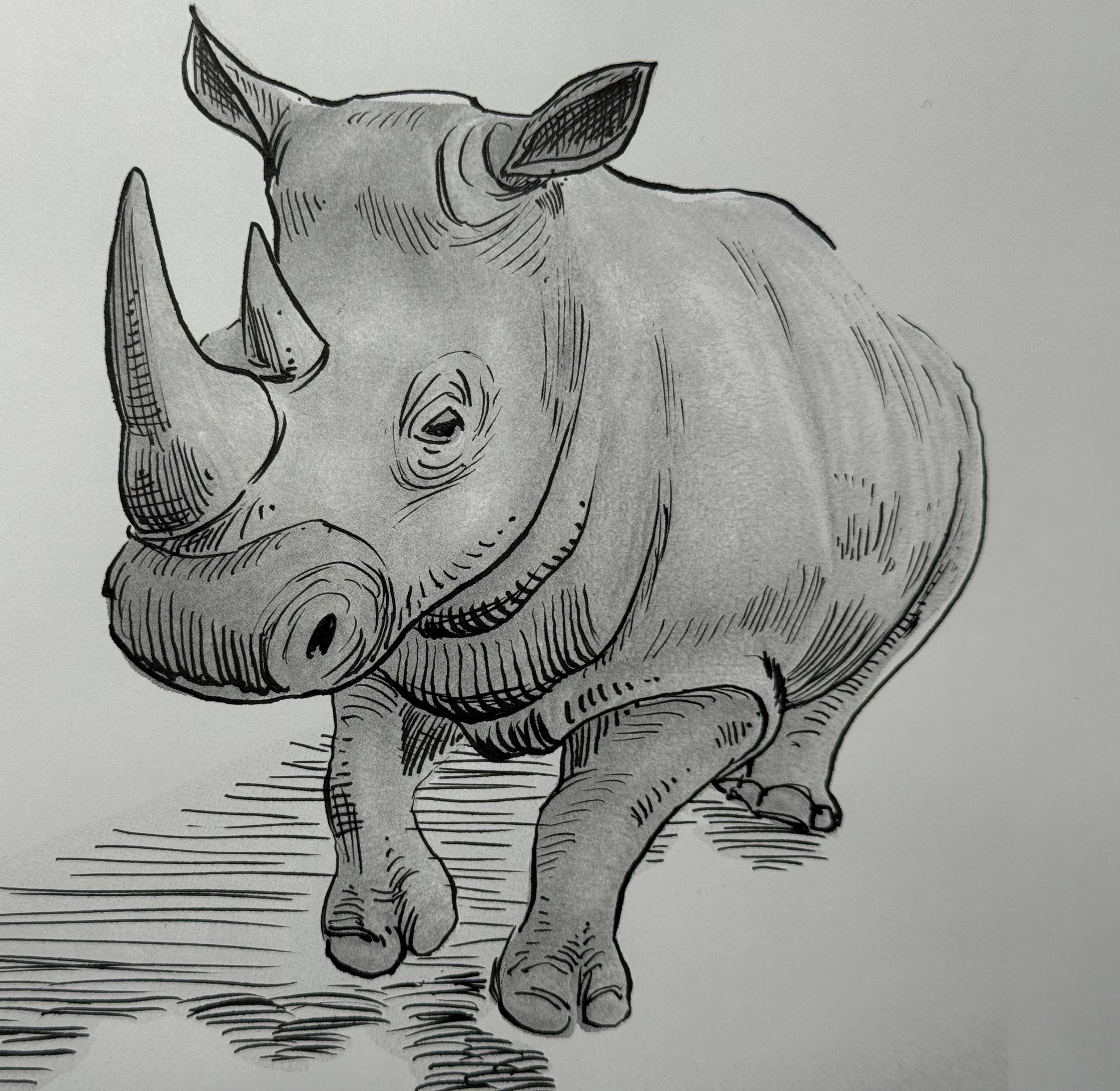
1. What Is High-Key Lighting? (Cinematography Definition)
Here’s the professional definition:
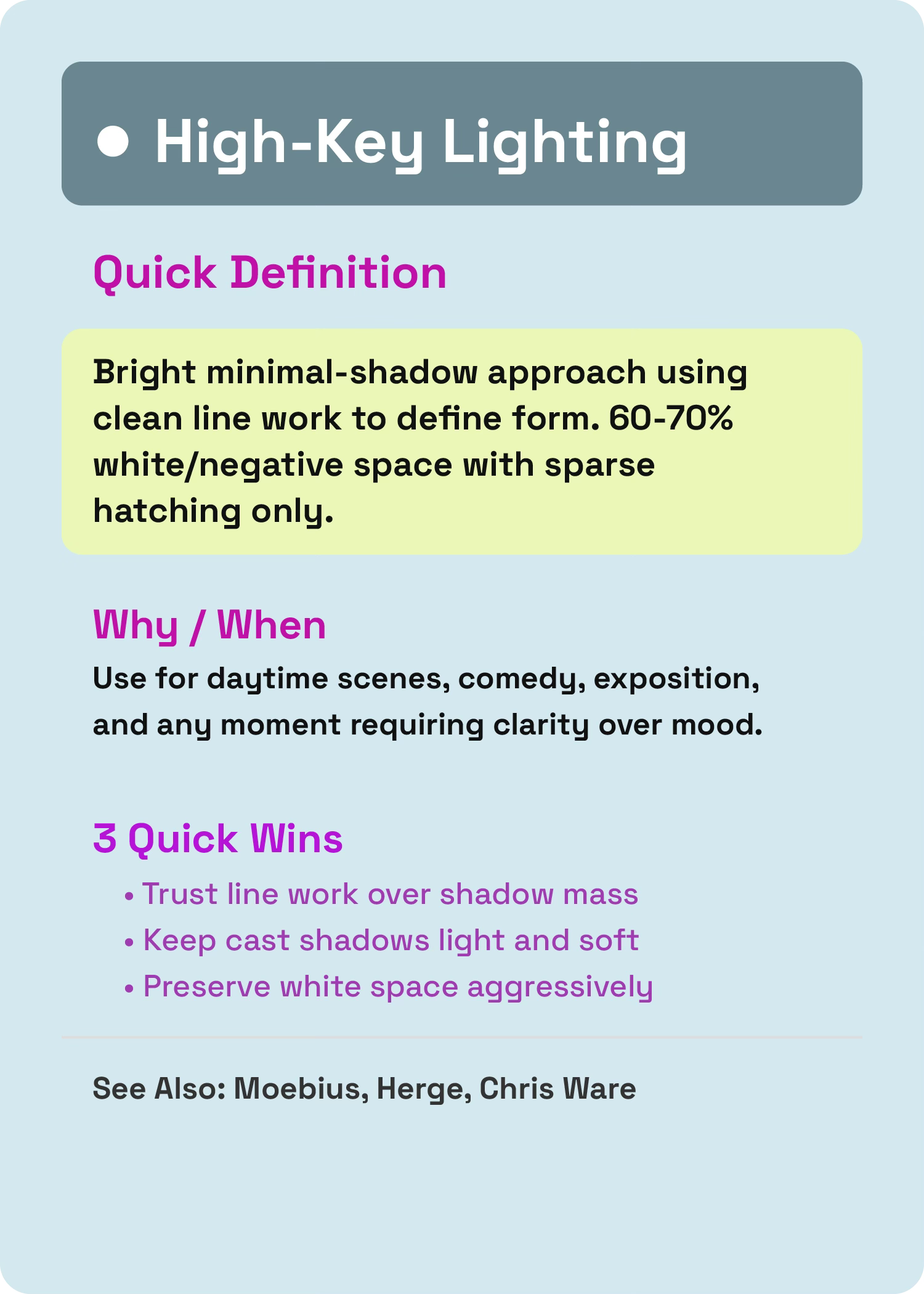
High-key lighting is a setup with bright overall illumination, low contrast, and shadows that remain light due to abundant fill and bounce light.
In plain language:
Light is everywhere.
Skylight, ground bounce, surrounding surfaces—everything is participating.
Shadows exist, but they’re small and soft.
You’ll get little pockets under the chin or beneath an object, but nothing dominates.
The image feels open, readable, and descriptive.
The viewer sees everything clearly.
In comics, high-key lighting is clarity.
It’s sunlight that reveals rather than conceals. Forms read cleanly. The world feels honest.
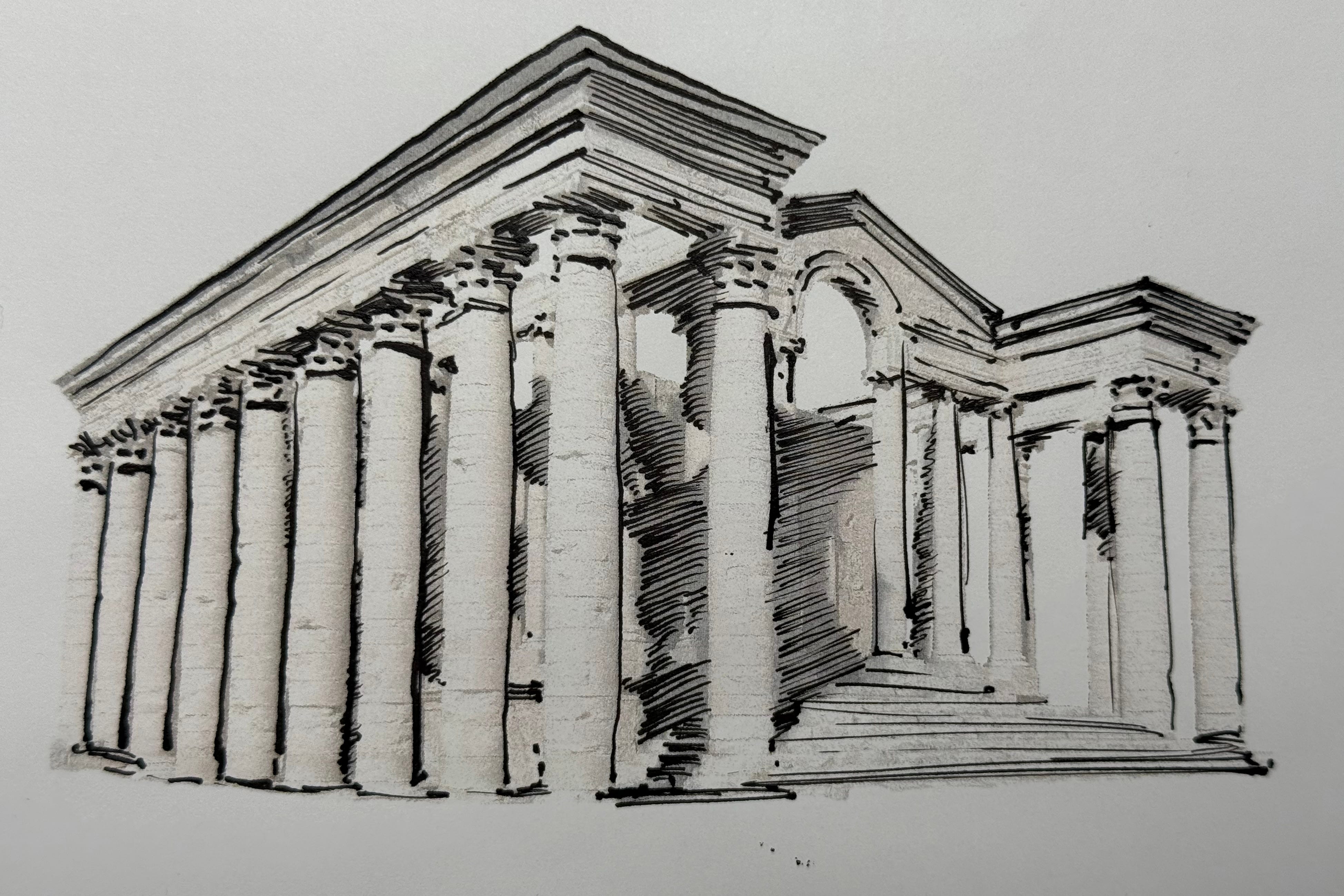
Artists who draw using the effect of high-key lighting:
Moebius (Jean Giraud) — especially 40 Days in the Desert
Hergé — Tintin
Hal Foster — Prince Valiant
Katsuhiro Otomo — many of his city daylight scenes
Cliff Chiang
Kazuo Oga & Studio Ghibli background teams (painterly, but structurally high-key)
This is the lineage of high-key clarity: clean forms, minimal shadow, expanses of light.
2. What High-Key Lighting Is Not
High-key lighting is not:
merely “daytime”
shadowless
flat or washed out
High-key conditions can happen under strong sunlight—as long as the fill light stays high enough to lift the shadows. Beaches, deserts, snowfields, open plazas, bright overcast: all are naturally high-key environments.
If you’ve ever taken a noon photograph and found the shadows strangely pale, that’s the signature of high-key illumination.
3. Low-Key Lighting (The Contrast Point)
Cinematography defines low-key lighting as:
A lighting setup with high contrast, strong directional key light, and deep shadows due to minimal fill.
This is the cousin of noir lighting:
dramatic shadows
strong silhouettes
limited visibility
a mood of tension or mystery
Where high-key lighting reveals information, low-key lighting withholds it.
High-key is descriptive.
Low-key is dramatic.
Both are valuable tools, but today we’re practicing high-key logic only.
4. Other Daylight Models (Quick Overview)
Just so you know the broader landscape:
Top Light / Zenith Light — midday sun; harsh downward shadows
Horizon Light — sunrise/sunset; long raking shadows
Overcast Diffusion — shadowless, extremely high-key
Ambient Soft Light — fog, winter, urban diffusion
We’ll explore these later. Today is strictly high-key daylight.
5. Practical Exercises You Can Try
Exercise 1 — “Find the Small Shadows”
We’ll look at high-key references. Your task:
identify tiny shadow pockets
recognize lifted shadow values
chart where bounce light comes from
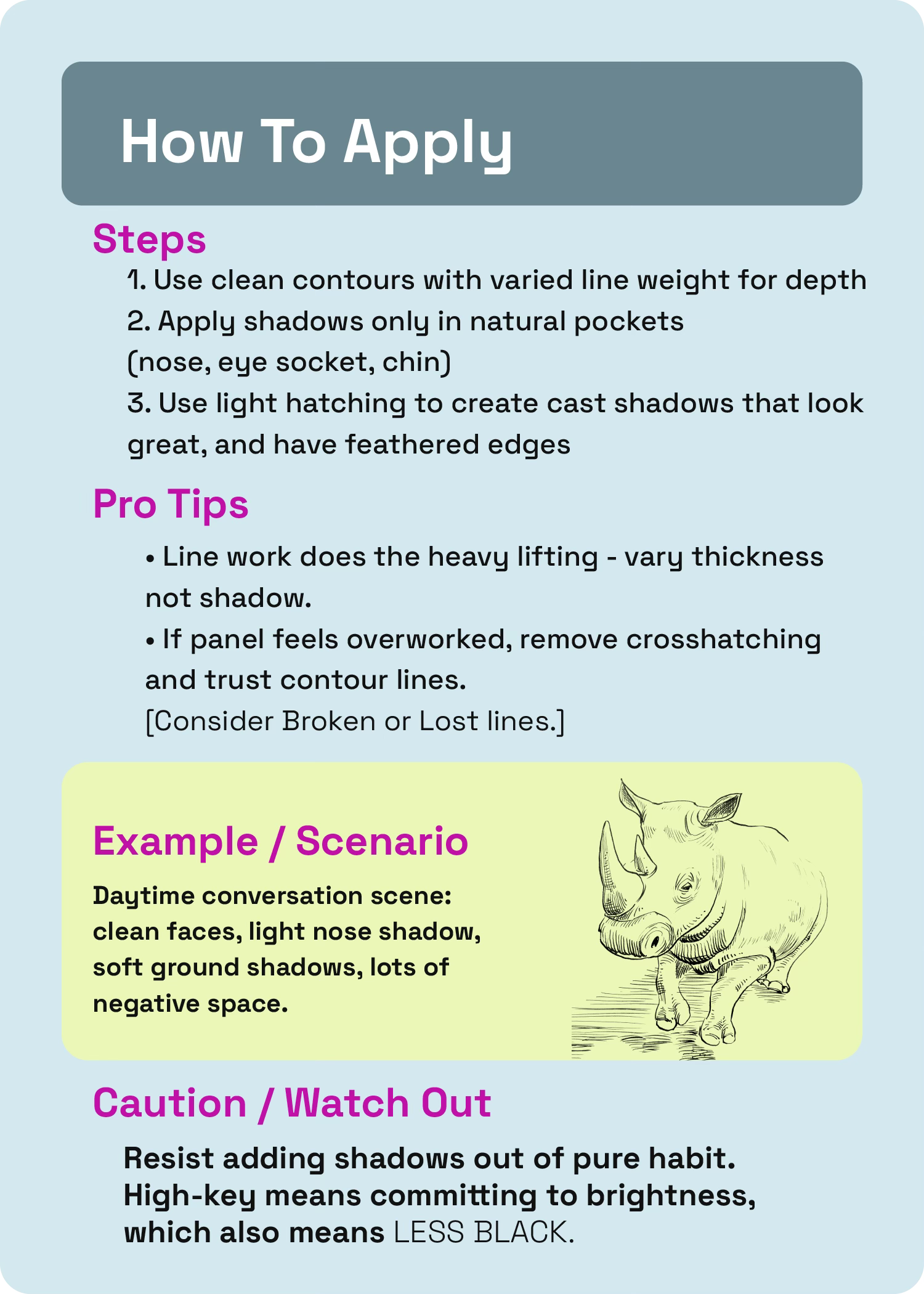
Then ink only the shadow shapes.
Exercise 2 — “Light Over Shadow”
Ink a simple form using micro-shadows only.
This forces you to build form through clean, open light rather than pools of darkness.
Exercise 3 — “Moebius Mode”
Choose a figure or landscape.
Limit every shadow to a shape no larger than a thumbnail.
Everything else is linework and clarity.
This is the essence of Moebius’s high-key mindset.
Exercise 4 — “Flip the Contrast”
Take a low-key reference and reinterpret it as a high-key scene.
This builds fluency in translating lighting intent.
6. Final Lighting Notes
What I want you to take away:
High-key lighting = bright illumination + low contrast + small, soft shadows
It’s the lighting of clarity, openness, and readability
It’s perfect for comics when you want form to be clear and environments to feel expansive
You already know how to draw shadows—now we’re learning how to draw light
We’re working in pen and ink.
Everything we do is either light or shadow.
Today, we’re learning the logic of a world filled with light.
Let’s get those imaginary C-Stands and Light Rigs rolling, shall we…
Charles
9 Dec 2025
This breakdown is super solid! Borrowing cinematography terminology for comics inking makes way more sense than inventing yetanother dialect. The distinction between revealing vs concealing information through lighting chocies is what often seperates functional layouts from ones that actually guide the reader. Those Moebius references are perfectly chosen, too.