ARTICLE 2: Desire Deep Dive: Adding Complexity to Your Stories
What makes a story unforgettable? Beyond the surface lies a web of nuances—desires that conflict, evolve, and collide. Great stories are about the messy, contradictory nature of human motivations.

Complex Stories Begin with Conflicting Desires
At the heart of every great story is a deceptively simple truth:
Someone wants something so badly,
they'll fight tooth and nail to get it
—or die trying.
But great stories don't end there. Complexity emerges when this singular, tangible want(s) collides with more profound, often hidden motivations—internal needs, spiritual purpose, or philosophical questions. And if that isn't enough, Character Desires are not static; they shift, ebb, and flow as the narrative progresses. Gets tricky, right?!
These layers of desire often work against each other. A character's external wants may clash with their internal needs, or their spiritual purpose may force them to question what they thought they wanted in the first place. This lack of alignment creates conflict, drives arcs, and reveals your story's rich emotional and thematic depth.
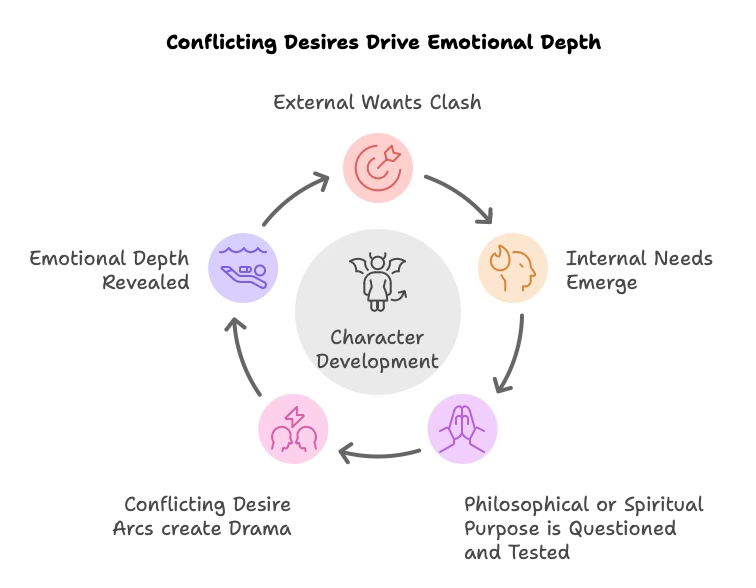
Let's break this down.
1. Desire in Tension: Wants, Needs, and Purpose
Great storytelling isn't about aligning your character's motivations—it's putting them at odds. The tension between what a character wants, what they truly need, and their deeper purpose is often the beating heart of complex narratives.
Examples of Tension in Desires:
• External Wants vs. Internal Needs: In Breaking Bad, Walter White wants power and respect (external), but what he truly needs is to reconcile his identity as a husband, father, and provider. The tension between these drives leads to his eventual downfall.
• Internal Needs vs. Philosophical Purpose: In The Dark Knight, Bruce Wayne's internal need for connection (to Rachel) conflicts with his philosophical purpose of serving justice. This tension forces him to sacrifice personal happiness for his greater mission.
• External Wants vs. Spiritual Purpose: In The Matrix, Neo's external desire to survive and escape morphs into a spiritual purpose: becoming "The One" and embracing his role as a savior. His journey reflects the clash between individual desires and a higher calling.
How to Use Misaligned Desires:
• Let desires collide. Your character's external wants, internal needs, and spiritual or philosophical purpose should create friction, not harmony.
• Create arcs for each. These desires evolve at different paces, generating tension and driving the story. Example: A character achieves their external goal but realizes it came at the cost of their internal needs.
• Tie conflicts to the theme. The tension between desires often reflects those difficult questions your story explores.
2. Evolving and Contradictory Arcs
A single, static desire isn't enough for complex storytelling. Great characters change, and so do their motivations. A character's external want might evolve as they learn more about themselves or their circumstances, while their internal needs and spiritual purpose may reveal themselves gradually—or in opposition.
Examples of Evolving Desires:
• In The Godfather, Michael's initial desire to stay out of the family business shifts as he's pulled into it. His external arc (protecting the family) contradicts his internal arc (losing his soul).
• In La La Land, Mia and Sebastian's external desires for their careers directly conflict with their internal need for each other's support, creating a bittersweet ending.
• In Eternal Sunshine of the Spotless Mind, Joel's desire to forget Clementine evolves into a realization that he can't let her go. The journey transforms his understanding of love and loss.
How to Use Evolving and Contradictory Arcs:
• Start with clarity. Define what your character thinks they want, but leave room for discovery.
• Introduce turning points. Force your character to confront whether their original desire is what they truly need.
• Let arcs intersect. External and internal arcs don't have to resolve simultaneously—this misalignment can make your climax more impactful.
3. Multi-Character Dynamics and the Collision of Desires
In complex narratives, your protagonist isn't the only one with conflicting desires. Multi-character stories thrive on the collision of goals, needs, and beliefs. When each character's motivations are distinct, their interactions become a dynamic source of tension and growth.
Examples of Colliding Desires:
• In Knives Out, every suspect has their own hidden motivation, creating a layered mystery where everyone's goals conflict with the protagonist's pursuit of the truth.
• In Game of Thrones, the collision of desires—power, revenge, love, survival—creates sprawling, intricate drama.
• In Little Women, each sister has unique desires that reflect different paths in life, leading to moments of both conflict and unity.
How to Use Multi-Character Collisions:
• Define what each character wants. Make sure their desires are clear, even if they're not explicit.
• Create opposing forces. Let one character's goal block or contradict another's, creating natural tension.
• Balance resolution. Not every character needs to achieve their desire—some arcs can end in failure or transformation.
4. Theme: How Misaligned Desires Reveal Meaning
The tension between wants, needs, and purpose creates conflict and deepens the theme of your story. These collisions force your character (and your audience) to confront larger questions about life, morality, or human nature.
Examples:
• In The Great Gatsby, Gatsby's obsessive desire to recreate the past collides with the reality of his unreachable dream, reflecting the story's theme of the hollowness of the American Dream.
• In The Shape of Water, Elisa's internal need for connection and belonging challenges societal norms, emphasizing the theme of acceptance and love's transformative power.
• In Blade Runner 2049, K's search for identity and purpose drives a meditation on what it means to be human.
How to Connect Theme to Desires:
• Show consequences. Let the tension between desires reveal the story's deeper message.
• Reflect the world. Use the external stakes to explore societal or philosophical questions.
• End with resonance. A satisfying conclusion doesn't mean all desires align—it means the character has grown or changed in a way that reflects the story's theme.
Bringing It All Together
At the deepest level, storytelling is about contradiction and tension. Great characters don't have neatly aligned desires—they have messy, clashing ones. Their external wants pull them in one direction, while their internal needs or spiritual purpose drag them in another. This tension drives the story, fuels conflict, and reveals your theme.
Key Takeaways:
• Let desires collide and evolve over time.
• Explore the misalignment between external wants, internal needs, and philosophical purpose.
• Use multi-character dynamics to amplify tension.
• Tie the resolution of these arcs to the story's deeper meaning.
Deep at the heart of your story the universal truth remains true:
Someone wants something so badly,
they'll fight tooth and nail to get it
—or die trying.
You must nail this because it stays true even when you layer complexity over this core truth. But the best stories dig deeper, showing how these desires transform and collide, revealing what it means to be human.
Adding complexity to a story with a tight core of burning desire is fun. Life is rarely simple, and stories are life on the page, so our stories have to reflect this. But if you nail down your character’s wants, needs, and beliefs so that all your complexity layers over a functioning core, then your narrative garden can flourish atop the fertile soil.
Charles Merritt Houghton
22 November 2024