

Relatable Characters Can Hook Readers in Just One Scene
Relatable, memorable characters don’t just happen. My C.H.A.R.M.I.N.G. framework reveals tools to convince readers to root for your protagonist from word "Go!"

First, a quick story: I love watching the first episodes of any TV series. I’m an inquisitive fellow. I ask myself, “What have the writers done here to get me on the protagonist’s side?” Writers face dueling tasks: they have to get the story up and running, sure, but most importantly, they must get me on the side of their characters. They have to immediately convince me to follow these characters. Only then will the season or series will be worth my time. Ain't easy; I have a pretty short attention span.
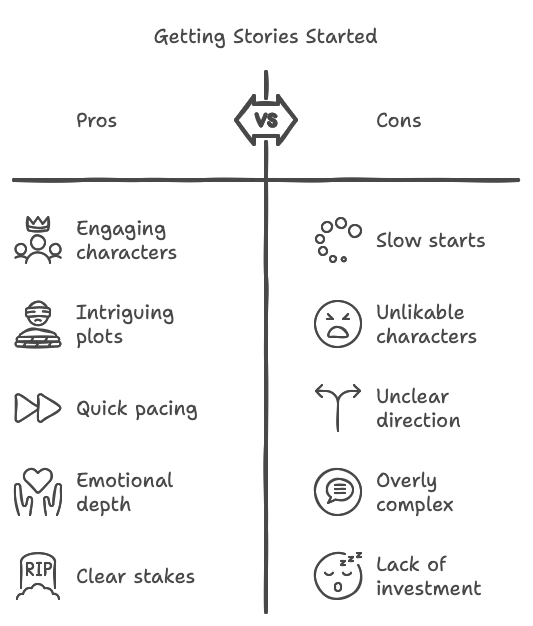
One of my biggest criticisms of contemporary stories is that writers don't give me a reason to get behind the main character. Why should I care? It’s their job to persuade me. If not, I’m out! Vast quantities of alternate stories await on comic shelves, iPad screens, and in giant immersive theaters. And my curt attention span is definitely the norm, not the exception.
You can quickly get your audience behind your character if you consciously attack the problem. Weave the ideas below into your scenes and show your characters in a way that—even when deeply flawed or making impossible choices—you signal that they’re still worth following. It's a glimmer of light in the darkness. By hinting at some positive traits, you're promising your audience that the struggle the character faces will end up somewhere interesting and exciting. This isn't about pandering or making your character a flawless superhero. Cardboard isn’t a good material for stories any more than it is for architecture. Good stories show vulnerabilities, flaws, and quirks, proving the characters are deeply human. Contradiction is a human truth.

When the story pushes them toward bad decisions or actions, readers need to see early hints of true character: despite grievous mistakes, something deep down might redeem them. They need to see that there's potential for growth or at least a reason to stick with them. In most stories, the protagonist isn't prepared for what's coming their way, and as they stumble through their mistakes, the audience needs a reason to keep rooting for them.
Of course, all bets are off regarding true antiheroes. But few stories follow vile or unsympathetic characters. These require distinct writing skills we aren’t covering today.
Ask yourself, " Do I want readers to care about my protagonist?" If the answer is "yes," start laying the groundwork on the first page.
Introducing the C.H.A.R.M.I.N.G. Framework
The C.H.A.R.M.I.N.G. framework is designed to help get readers on your character's side from the beginning. The goal is to create characters your audience can connect with—whether through admiration, empathy, or curiosity. This framework offers a selection of tools to establish relatability, depth, and intrigue quickly, so your audience is willing to follow the character's journey, even through their darker moments or mistakes.
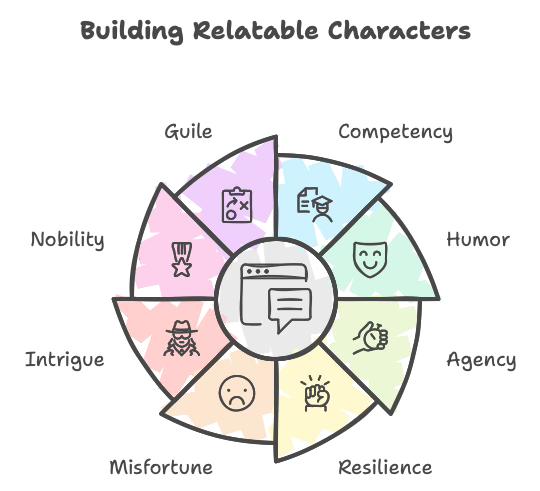
It's important to note that your characters shouldn’t embody every trait from the framework. Instead, selectively choose from these traits, depending on your character and your story. It’s your pen, not mine.
Here's what C.H.A.R.M.I.N.G. stands for:
1. Competency: Show Their Skills or Talents
• What It Is: Readers respect characters who are good at something. Whether it's a specific skill, expertise, or talent, showing competency makes your character seem capable and worth following.
• How to Use It: Show a moment where your character demonstrates their ability in some area early. This could be physical, intellectual, or emotional competency—anything that establishes they have something valuable to contribute.
2. Humor (or Affability): Make Them Likable or Charming
• What It Is: Characters who make us smile or laugh immediately feel more approachable. Even if they face painful situations or react in deeply flawed ways, humor and charm can quickly build a bridge with your reader.
• How to Use It: Include moments where your character uses humor, clever dialogue, or charm to create levity. These moments help humanize them and make them more relatable.
3. Agency: Show Proactivity or Drive
• What It Is: Characters who take control of their story and act with agency are far more engaging than those simply swept along by events. Readers want to see characters who make decisions and shape their own destiny.
• How to Use It: Put your character in a situation where they must choose or take action. Show that they're not passive but are actively driving their own narrative.
4. Resilience: Show Grit and Determination
• What It Is: Readers admire characters who refuse to give up in the face of adversity. Resilience—physical, emotional, or moral—demonstrates strength and convinces readers to root for their success.
• How to Use It: Present your character with a challenge early on, and show them pushing through it, even if they fail at first. Their willingness to persist makes them more sympathetic.
5. Misfortune: Reveal Suffering or Undeserved Hardship
• What It Is: When characters endure misfortune or unfair challenges, it quickly evokes sympathy from the reader. Characters who suffer through no fault of their own give readers a reason to care about their fate. Another technique is to punish your character severely for a minor transgression. The disproportionate reaction triggers indignation at the unfairness baffling them. Nice trick.
• How to Use It: Show a moment where your character faces undeserved hardship—personal loss, an injustice, or a betrayal. Readers will be drawn in by their struggles and more willing to follow their journey.
6. Intrigue: Add Mystery or Complexity
• What It Is: Characters with intrigue—whether through moral contradictions, hidden depths, or mysterious backstories—are inherently more compelling. Readers are naturally curious and want to learn more about what makes these characters tick.
• How to Use It: Hold back on fully revealing your character. Show hints of a secret or moral conflict that keeps readers guessing who they are and what motivates them.
7. Nobility (or Self-Sacrifice): Show Sacrifice for a Greater Good
• What It Is: Characters who demonstrate nobility—through self-sacrifice or a deep commitment to others—gain emotional depth. Readers respect characters who are willing to lose something for the sake of the greater good.
• How to Use It: Give your character a moment where they put others first, even at a personal cost. This shows that, despite their flaws, they have a solid moral core.
8. Guile: Demonstrate Cleverness, Resourcefulness, or Strategy
• What It Is: Guile isn't just about deception but cleverness and resourcefulness. Characters who can outthink their enemies or solve problems with their wits are engaging and interesting.
• How to Use It: Show your character using strategy, intellect, or creative thinking to navigate a difficult situation. It doesn't have to be manipulative; it's about showing that they're not just reactive but actively thinking ahead.
Applying The Framework in Your First Scene
Choose 2-3 Traits: Don't feel the need to use every trait from the C.H.A.R.M.I.N.G. framework. Pick a few key traits that best fit your character's personality and arc, and focus on establishing those traits in the first scene.
Show, Don't Tell: Rather than telling the reader your character is resilient or charming, show these traits through their actions. Let the character's behavior and decisions reveal who they are without heavy exposition. Lean on subtext or other characters discussing your main character. Too obvious, and the illusion is ruined.
Create an Immediate Conflict: Give your character a challenge or choice early on, demonstrating their core traits. It should give readers insight into their strengths and weaknesses, whether it's a physical obstacle or an emotional conflict.
Tease Mystery and Depth: If you want to use intrigue as a key trait, leave some unanswered questions about your character's past or motivations. This keeps readers hooked and wanting to learn more.
Use Humor to Build Connection: A well-timed joke or moment of levity can make your character relatable. Even in darker stories, humor can humanize your character and build rapport with the reader.
Have I Got You on MY Side?
My C.H.A.R.M.I.N.G. framework gives you eight tools for establishing relatability. Pull it off, and your readers invest in your characters and their plight. Whether aiming for admiration, empathy, or curiosity, using just a few traits in the first scene can help hook your readers and keep them engaged. This isn't about making a character perfect—it's about signaling they're worth following, flaws and all.
By weaving in these elements naturally, you build trust with your audience and ensure that they'll stick with your character through every twist and turn of the story. Pick and choose which works for your story. Do NOT use all of them. You don't have the narrative space.
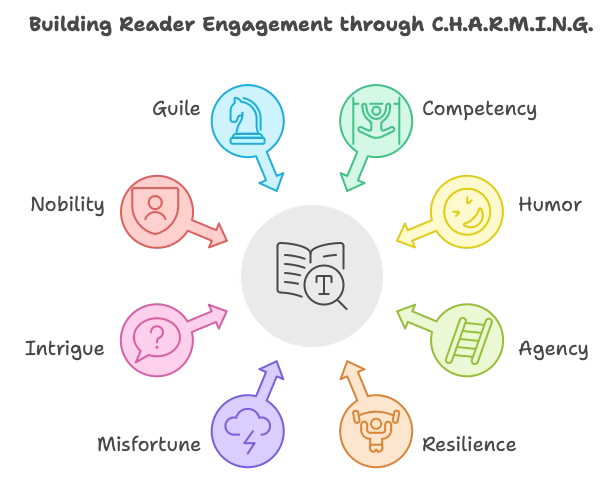
Like any great meal, different characters and stories require different ingredients. If you're trying to make a killer curry, you don't insist on putting in boatloads of Dill and Tarragon just because you've got them. Balance your choices. Tune it for your specific story about your specific character told your way.
Just some tools for the toolbox. Let me know in the comments if you think I’ve missed any other helpful tools. Or maybe you think some don’t belong. I’d love your insights.
Charles Merritt Houghton
22 October 2024

A lot to absorb. Thanks for this email.